Why Most Guitar Polish Is Just Silicone in a Bottle
By David Aitken · The Complete Guitar · Dundee, Scotland
Take a satin or matte guitar and treat it with carnauba wax or a silicone polish before a few gigs. From across the room, it looks clean enough. Up close under a bench lamp, it looks wrong.
Satin and matte finishes get their flat, velvety look from a microscopic texture in the clear coat that scatters light instead of reflecting it cleanly. Rubbing wax or silicone into that surface fills the tiny valleys and starts buffing the high spots smooth. Right where your forearm rests or where the cloth pressed hardest, you get uneven, greasy-looking shiny patches that catch every fingerprint.
If you catch a fresh coat of silicone or wax early with a damp microfibre cloth and a drop of Clarity Wash, the surface film lifts off onto the cloth. Once repeated buffing has burnished a matte finish shiny, though, no cleaner can put the flat texture back.
That is the thing nobody tells you about guitar polish. Most of the time, you are not polishing anything.
What Guitar Polish Actually Does
The shine on a guitar comes from the finish, not from the polish. Nitrocellulose, polyurethane and polyester are all sprayed, cured and buffed at the factory or the refinisher's. That gloss is already there.
Most bottled guitar polishes add a thin film on top. The film fills hairline scratches, makes the surface feel slick, and gives a quick wet look. On many products, that film is silicone.
It looks great for about a week.
Then the film picks up dust and finger oil, the shine goes streaky, and you reach for the bottle again. Each coat sits on the last one.
Why Silicone Is a Problem
Silicone is stubborn. It does not rinse off easily, and it does not stay where you put it.
If the guitar ever needs a touch-up, a ding repair or a refinish, silicone residue stops new lacquer or glue from flowing out and bonding evenly. The usual result is fish-eyes: small round craters where the fresh finish pulls away from the contaminated spot. Because silicone creeps into finish checks, binding seams and bare wood pores, even repeated wiping with naphtha can struggle to clear it completely before a repair.
For the chemistry on nitrocellulose in particular, I cover it in full in the nitrocellulose-safe guitar cleaner guide. This guide is for everyone else too: poly, satin, and anything with a finish you would like to keep clean.
Cleaning and Polishing Are Different Jobs
Cleaning removes things: sweat salts, finger oil, belt-buckle grime, stage dust.
Polishing adds things, or removes a microscopic layer of the finish itself if the polish is abrasive.
A guitar that looks dull is almost always dirty, not worn. Clean it first. If the gloss comes back, you never needed the polish.
Finish Types and What They Need
Gloss polyurethane and polyester
Hard and forgiving. A plain, silicone-free water-phase clean is all it needs. Silicone polish makes it slippery and streaky.
Nitrocellulose lacquer
Thinner and more reactive. Avoid citrus solvents, petroleum distillates and anything with silicone. Gentle water-phase cleaning only.
Satin and matte finishes
These are deliberately not shiny. Polish buffs the surface glossy in patches, and you cannot easily undo that. Clean only.
Raw or oiled necks
No polish on the back of the neck. A dry, clean cloth does most of the work.
What I Use on the Bench
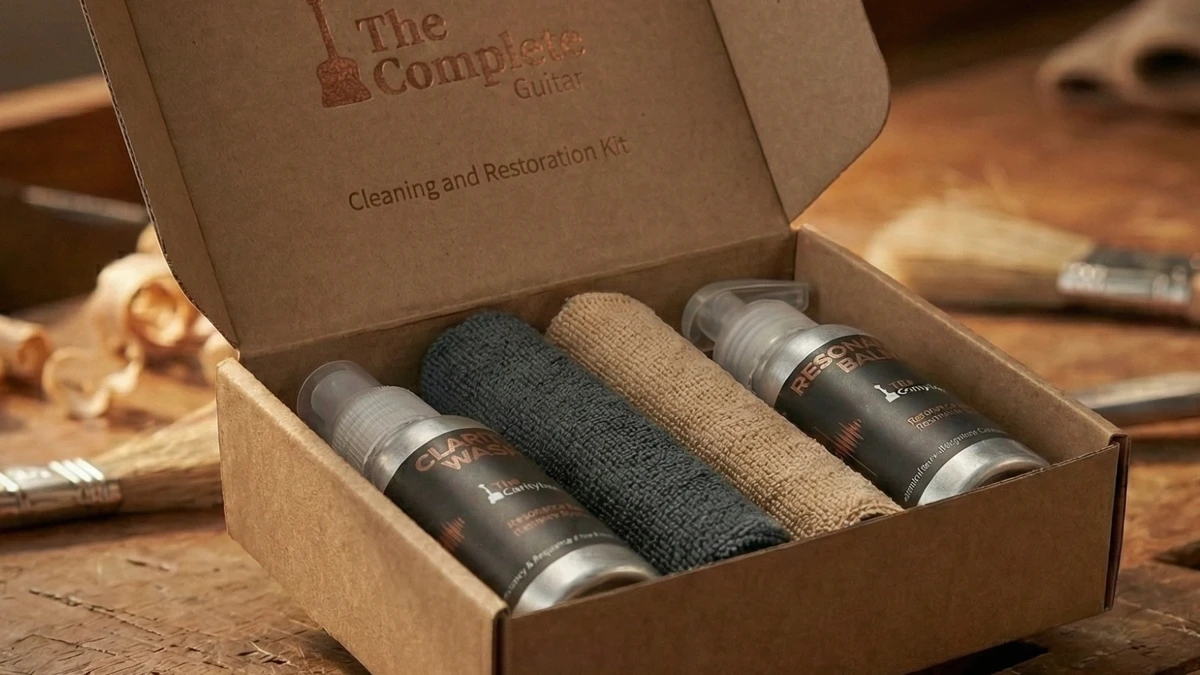
Clarity Wash is a plant-based, silicone-free body cleaner I make in the Dundee workshop. It is a deionised water-phase formula made with white vinegar and castile soap (pH 4). It lifts finger oil and grime and leaves nothing behind to build up.
It is £9.99, and it is the same bottle I use on every guitar that comes through the workshop.
How I Clean a Guitar Body
- 1
Dry wipe first. A dry microfibre cloth removes loose grit that would otherwise scratch the finish.
- 2
Cloth, not guitar. Put a small amount of Clarity Wash on a folded, clean cloth. Never spray the guitar. Liquid creeps under pickguard edges, into pickup cavities and along binding.
- 3
Straight strokes. Wipe along the grain direction in gentle straight lines. Circles grind grit around.
- 4
Dry buff. Use a clean, dry section of cloth. Check the panel under raking light.
- 5
Hardware. Wipe the bridge, knobs and tuner buttons with a lightly dampened corner. Keep liquid away from pots and pickups.
What I look for under the lamp: no streaks, no haze, and a surface that feels clean rather than slippery. If water droplets bead up like they would on a waxed car, there is a film on the surface.
For the fretboard, use a separate cloth and a dedicated conditioner, especially around the 12th fret where dry grain and finger grime build up fastest. That is a different job with different materials, and I cover it in rescuing dry rosewood and ebony fretboards.
When a Polish Is Worth Using
I will not tell you polish never has a place. Light swirl marks and buckle rash on a gloss finish are sometimes genuinely better with a fine finishing compound.
That is a one-off job done carefully, not a pre-gig habit. If the mark is deeper than a fingernail can catch, I would rather look at it with you than have you rub at it. Tell me what you are seeing and I will say honestly whether it needs work.
When to Hand It Over
If the guitar is very grimy, has years of polish build-up, or you simply do not fancy tackling a vintage instrument yourself, the Deep Clean and Hydrate (£65) covers the body, hardware and fretboard on the bench. Servicing runs on evenings and weekends.
- Zone 1 (Dundee, Broughty Ferry, Monifieth): free doorstep collection and return. Get in touch and we will arrange an evening collection window.
- Zone 2 (Carnoustie, Longforgan): collection and return with a £10 travel fee.
- Zone 3 (wider Angus, Perthshire, Fife and beyond): by prior appointment only, handed over outside 33E Ballindean Road.
For home care, the Complete Care Kit (£18.99) pairs Clarity Wash with Resonance Balm and a microfibre cloth.
I refuse to be defeated by a stubborn finish problem. If you are not sure what you are looking at, send me a photo and I will tell you what I think before you spend anything.
What This Teaches Us
- Most guitar polish adds a surface film, usually silicone, rather than restoring shine.
- A dull guitar is almost always dirty, not worn. Clean first, then judge.
- Silicone residue can cause fish-eyes in any future touch-up or refinish.
- Satin and matte finishes should be cleaned, never polished.
- Apply cleaner to the cloth, never to the guitar.
- If water beads on the body, there is a film on it.
Questions People Ask
What can I use instead of guitar polish?
A silicone-free, deionised water-phase guitar cleaner such as Clarity Wash (£9.99, pH 4) applied to a clean microfibre cloth lifts sweat salts and finger oil without leaving a surface film behind.
Why is silicone bad in guitar polish?
Silicone leaves a stubborn film that picks up dust and fingerprints, stops fresh lacquer or glue from bonding evenly during future repairs (causing fish-eyes), and creeps into finish checks and bare wood pores where even naphtha struggles to strip it.
Can you use wax or silicone polish on a satin or matte guitar?
No. Rubbing carnauba wax or silicone polish onto a satin or matte finish fills the microscopic texture and buffs uneven, irreversible shiny patches where the cloth or your forearm presses hardest.
How do I tell if my guitar has silicone polish build-up?
Check the body under raking light for greasy streaks and notice how water behaves on the surface: if droplets bead up like they would on a waxed car, there is a polish film on the finish.